
Rafael Neumann · 17 November 2026
Unlocking Patterns in Cross-Device User Behavior Across Various Stages of the Bidding Cycle in Specialized Marketplaces
Specialized marketplaces that operate on bidding systems show distinct shifts in how users interact with platforms depending on the device they choose at each phase of the cycle. Researchers tracking activity across mobile, tablet, and desktop environments have documented consistent sequences where initial discovery often occurs on one device while deeper engagement and final decisions move to another. Data collected through platform analytics in 2025 and early 2026 indicate that these transitions follow repeatable patterns tied to the time of day, session length, and stage of the bidding process.
Defining the Bidding Cycle Stages
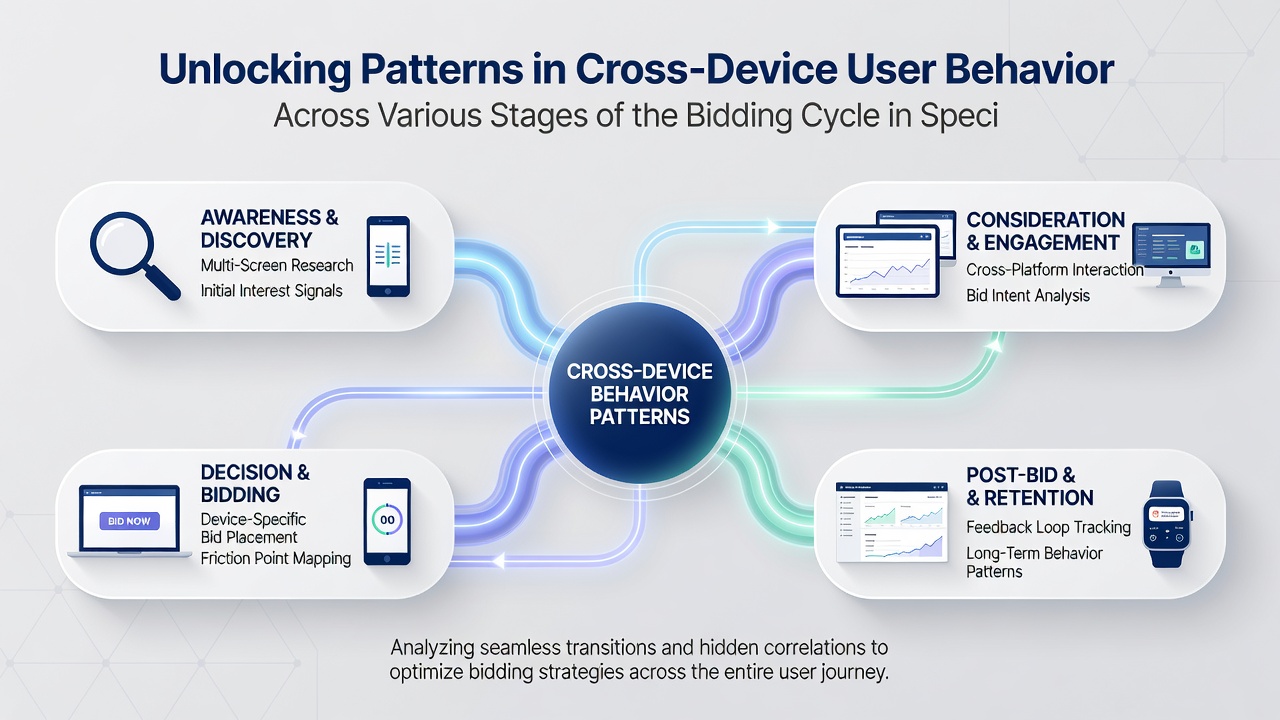
The bidding cycle in these marketplaces breaks down into four primary stages that observers have mapped through log data and session recordings. The awareness stage involves users first encountering an item through search results or recommendations. Research follows when participants review specifications, seller history, and comparable listings. Active bidding occurs once users place offers and monitor competition. The post-bid phase covers outcome review, payment if successful, or strategy adjustment for future auctions. Studies from institutions such as the University of Melbourne show that device preferences change systematically across these stages rather than remaining fixed throughout a single session.
Device-Specific Behaviors During Awareness and Research
Mobile devices dominate the awareness stage in many specialized categories including vintage collectibles and niche industrial equipment. Session logs reveal shorter dwell times on phones during initial scans, with users often switching to tablets or desktops when they begin comparing multiple listings side by side. Research conducted by the Australian Bureau of Statistics on digital commerce patterns found that tablet users spend longer intervals reviewing detailed product descriptions and seller ratings, while desktop sessions correlate with higher volumes of tabbed comparisons and spreadsheet exports of bidding histories. These transitions typically happen within the same evening or across consecutive days, creating traceable cross-device paths that platforms record through account-linked identifiers.
Active Bidding and Real-Time Monitoring Patterns
Once bidding becomes active, behavior diverges sharply by device capability. Mobile users tend to rely on push notifications and quick refresh actions, whereas desktop participants maintain persistent dashboard views that update in real time. Figures released by Statistics Canada on online marketplace engagement during 2025 highlight that desktop sessions account for the majority of last-minute bid adjustments, particularly in high-value categories. Tablet activity peaks during midday hours when users review ongoing auctions between other tasks. Platform operators have noted that simultaneous logins from multiple devices occur more frequently in November 2026 leading into holiday-driven auction surges, with mobile serving as the notification layer and desktop handling the precise bid inputs.
Post-Bid Activity and Cross-Device Continuity
After an auction closes, activity often returns to the original discovery device or shifts again depending on outcome. Successful bidders frequently complete payment on desktop for security features, while mobile handles post-auction messaging with sellers. Unsuccessful participants show elevated return visits across all devices to track similar items or adjust watch lists. Research published through the Journal of Interactive Marketing in 2025 documented that these post-bid loops create measurable retention signals, with users who switch devices mid-cycle demonstrating higher repeat participation rates in subsequent auctions within the same marketplace vertical.
Data Sources Informing Pattern Recognition
Analytics firms and academic teams have compiled datasets that link device telemetry to bidding timestamps and user account histories. Reports from the European Commission on digital single market activity provide aggregated statistics on cross-border bidding sessions that cross device boundaries, revealing seasonal spikes in tablet-to-desktop handoffs during autumn months. Platform operators apply these insights to optimize notification timing and interface elements so that users encounter consistent item states regardless of which device they activate next. The patterns hold across multiple specialized categories because the underlying bidding mechanics remain consistent even as item types vary.
Conclusion
Cross-device patterns in specialized bidding marketplaces emerge from the interaction between session timing, stage requirements, and hardware affordances. Data compiled through 2026 continue to show that awareness begins predominantly on mobile, research expands on tablets and desktops, active bidding splits between notification-driven mobile checks and sustained desktop monitoring, and post-bid actions redistribute according to task complexity. These sequences allow marketplace operators to align features with observed flows while maintaining continuity across user accounts.