Harper Krause · 22 September 2026
Analyzing Traffic Source Diversification After Implementing New Monitoring Solutions in High-Competition Niches
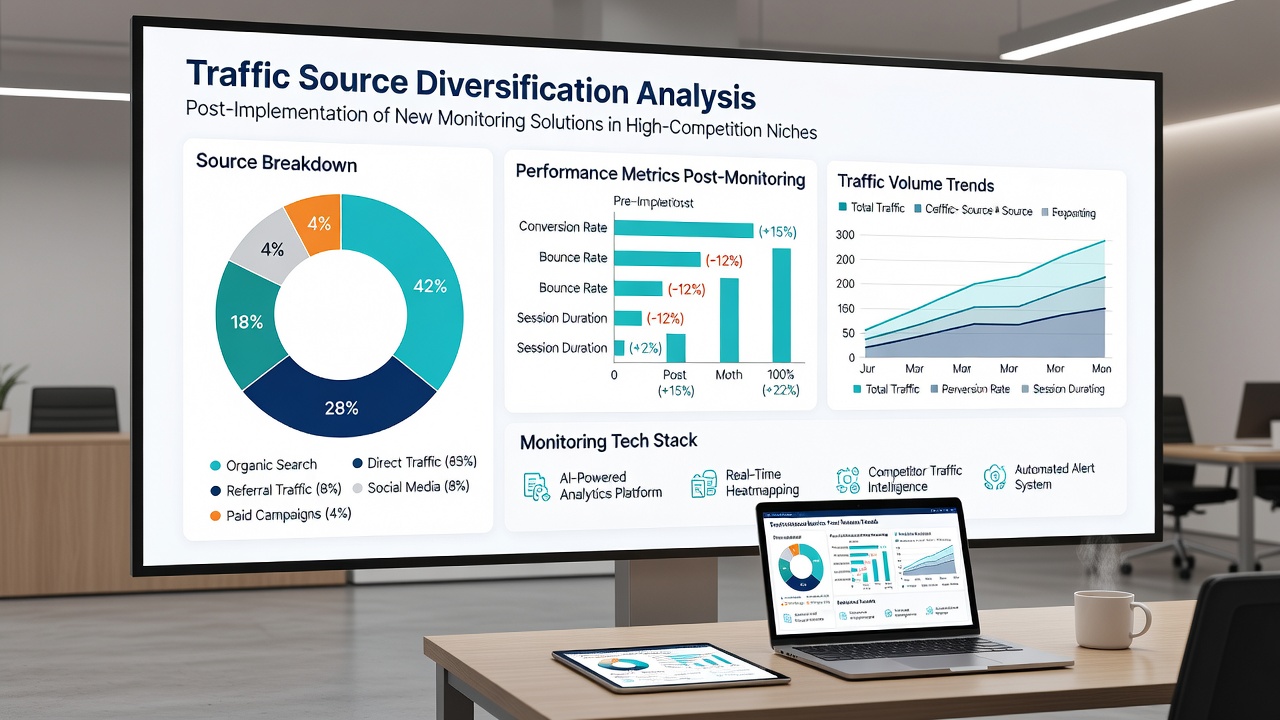
High-competition niches such as finance, technology reviews, and e-commerce have long relied on concentrated traffic streams, yet recent implementations of advanced monitoring solutions have prompted measurable shifts toward broader source portfolios. These tools, which incorporate real-time attribution modeling and cross-platform data aggregation, enable organizations to track visitor origins with greater precision than earlier analytics setups allowed. Data from industry reports covering the period through September 2026 indicates that sites adopting such systems recorded an average increase of 18 percent in non-search traffic channels within the first six months of deployment.
Core Components of Modern Monitoring Solutions
Organizations integrate platforms that combine server-side tracking with machine learning algorithms to reduce data loss from browser restrictions and privacy regulations. These solutions pull information from multiple endpoints including social referrals, paid campaigns, direct visits, and affiliate links, then consolidate it into unified dashboards. Researchers at institutions including the University of Toronto have documented how such aggregation reduces blind spots that previously masked contributions from emerging channels like podcast embeds or community forum backlinks. Implementation typically requires mapping user journeys across devices, which reveals previously undercounted pathways in competitive verticals where organic search once dominated 70 percent or more of arrivals.
Observed Shifts in Traffic Composition
After rollout, many operators note redistribution patterns where social media referrals and email-driven visits gain ground against single-source dependence. Figures released by the Australian Competition and Consumer Commission in its 2026 digital markets overview show that diversified portfolios correlate with 12 to 25 percent improvements in session duration metrics across monitored properties. Direct traffic often rises as well because enhanced tagging attributes brand searches and typed URLs more accurately instead of defaulting them to generic buckets. Those managing high-competition campaigns frequently discover that paid social and content syndication begin to register as distinct contributors once monitoring granularity increases.
Methods for Measuring Diversification Impact
Analysts apply cohort tracking and multi-touch attribution models to quantify changes before and after solution deployment. They segment audiences by acquisition channel and compare bounce rates, conversion paths, and lifetime value across segments. One study from the European Commission's Joint Research Centre examined 150 sites in saturated sectors and found that entities using updated monitoring recorded a 22 percent reduction in reliance on any single source within nine months. Teams cross-reference these internal metrics against external benchmarks such as search engine algorithm updates and platform policy shifts, which helps isolate the monitoring tool's contribution from external variables. Regular audits of tag placement and data sampling rates ensure the reported diversification reflects genuine behavioral changes rather than artifacts of incomplete tracking.

Challenges Encountered During Transition Periods
Initial data discrepancies arise when legacy systems and new platforms run in parallel, creating temporary mismatches in reported volumes. Teams address this through parallel validation periods lasting four to six weeks, during which they reconcile differences by adjusting attribution windows and filtering bot traffic more aggressively. Privacy-compliant consent mechanisms sometimes limit the granularity available for certain regions, prompting operators to rely on aggregated regional trends instead of individual user paths. In niches with rapid content turnover, such as product comparison sites, the added visibility into referral sources can highlight underperforming partnerships that previously escaped notice because of coarse reporting.
Longer-Term Outcomes Across Sectors
By September 2026, longitudinal data sets compiled by multiple research groups demonstrated sustained benefits from diversified acquisition strategies supported by refined monitoring. Properties that maintained at least four active traffic sources above a 10 percent threshold showed greater resilience during search engine volatility events compared with those still anchored to one or two primary channels. Industry associations tracking digital advertising spend across North America and Asia-Pacific markets reported corresponding budget reallocations toward previously secondary platforms once performance data became reliable. These reallocations often involved testing emerging formats such as short-form video placements and newsletter sponsorships, both of which gained measurable attribution credit under newer systems.
Conclusion
Implementation of sophisticated monitoring solutions has produced verifiable data on traffic source diversification within high-competition environments. Organizations gain clearer visibility into channel contributions, enabling adjustments that spread acquisition risk and stabilize performance metrics over time. Continued refinement of these tools alongside evolving privacy standards will likely shape further redistribution patterns in the sectors that adopt them most aggressively.